

Table of Contents
Introduction
Content marketing strategies are the only thing keeping modern professionals from drowning in a sea of digital noise. If you feel like you are wearing ten different hats today, you aren’t alone; a recent Adobe study found that 20% of marketers are now juggling ten or more roles at once.
The reality of 2026 is that content marketing is no longer just about “writing blogs.” It is about managing a complex ecosystem of AI, social media, and evolving search engines. To see how paid social fits into this mix, check out our deep dive on what are Facebook Ads and how they drive growth.
This guide isn’t just another theoretical document. It is a survival and growth manual designed to help you build effective content marketing strategies that actually drive results without leading to burnout.
1. The Fundamentals: What and Why?
Before we dive into the tactics, we need to define our terms clearly.
- Content Marketing: The act of creating and sharing valuable material like blogs, videos, and social posts.
- Content Marketing Strategy: The documented plan for how you use that media to achieve specific business goals.
- The Key Difference: While content marketing is the action, your content marketing strategy is the “why” and “how” that connects those actions to your revenue.
Why You Need a Strategy in 2026
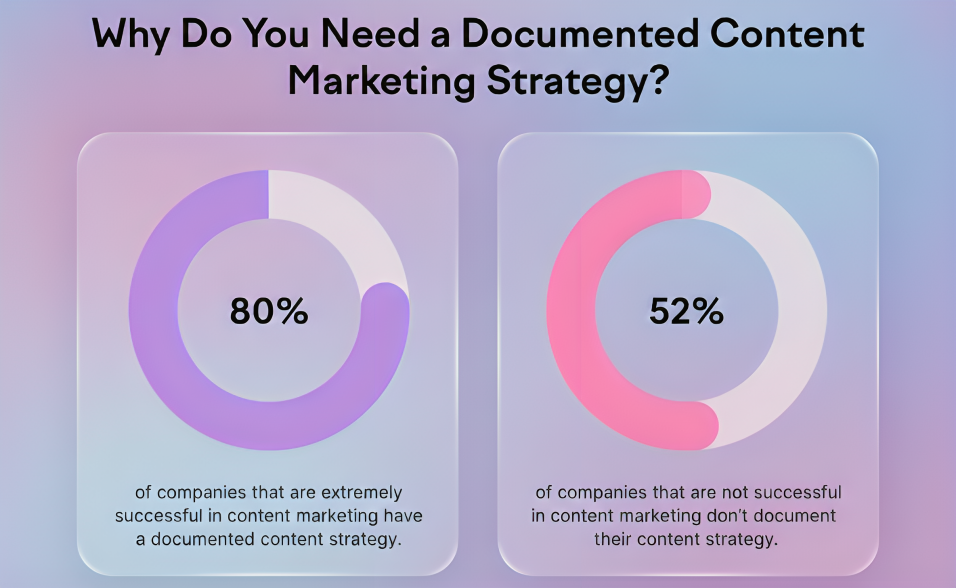
In an era of AI-generated clutter, a solid content marketing strategy acts as a filter for your brand.
- Human Relevance: It ensures your brand remains human and useful, preventing you from becoming just another bot-generated voice in a crowded feed.
- Resource Allocation: For the “10-hat” marketer, a strategy prevents “random acts of content” that waste time and budget on platforms your customers don’t even use.
- Compounding ROI: A library built on sound content marketing strategies builds long-term organic equity. Unlike paid ads, this value doesn’t disappear the moment you stop paying.
2. Foundations: Building a “Lean” Strategy
The best content marketing strategies start with a “Problem-First” approach. We call this Persona Mapping, but it goes deeper than just age or location.
- Identify the 3 AM Problem: What is the specific fear or challenge keeping your customer awake at night?
- Solve, Don’t Sell: Use your content marketing plan to solve that problem for free first. This builds the trust necessary to make a sale later.
- The Buyer’s Journey: Recognize that someone looking for a “how-to” guide is in a different mindset than someone looking for a “pricing comparison.”
The Content Funnel 2.0
Your content marketing strategy should guide users through three specific stages:
- Awareness (Top of Funnel): Educational content focused on broad industry challenges. Think “How to scale a startup” or “Trends in 2026.”
- Consideration (Middle of Funnel): Comparison guides, webinars, and case studies that prove your specific value over competitors.
- Decision (Bottom of Funnel): ROI calculators, free trials, and product demos that lead directly to a final purchase.
3. The “GEO” Era: Content for AI & Search
We are transitioning from traditional SEO to GEO (Generative Engine Optimization). This is a massive shift in how we approach content marketing strategies.
To succeed, you must become a Citable Source. You want AI agents like ChatGPT, Perplexity, or Gemini to cite your brand as the authority when a user asks a question.
Pro-Tips for GEO Success:
- Snippet-Friendly Formatting: Start your sections with a direct question (H2 or H3 tags).
- The 2-Sentence Rule: Provide a clear, bolded answer in the first two sentences of the paragraph following the question.
- Topical Clusters: Don’t just write one post. Write one deep “Hub” post and link at least five smaller “Spoke” posts to it to show the search engine you have total expertise on the subject.
- Data-Driven Insights: Include original statistics or surveys. AI engines love citing “new” data that hasn’t been scraped a million times before.
4. The “1-Pillar, 10-Snippet” Workflow
Efficiency is the secret to successful content marketing strategies. You don’t need more tools; you need a better workflow to reclaim your time.
The Atomization Strategy: Start with one high-quality Anchor Format (like a 30-minute webinar, a deep-dive white paper, or a founder interview), then break it into:
- 2 SEO Blogs: Take the transcript and turn it into polished, long-form articles for search traffic.
- 5 Social Posts: Create “Zero-Click” content for LinkedIn or X that gives away the main points immediately.
- 3 Short Videos: Extract 60-second clips for Reels, TikToks, or YouTube Shorts.
- 1 Newsletter Update: Summarize the key findings for your existing email subscribers.
This approach helps you reclaim the 60 hours lost annually to inefficient tools by focusing on quality over quantity.
5. Human-First Content: Winning Against the Bots
Audiences in 2026 trust people, not corporate logos. This “Vibe Factor” is a crucial part of modern content marketing strategies.
- Use First-Person Data: Share your personal experiences, failures, and unique data. This is the only thing AI cannot fake.
- Zero-Click Value: Provide the full answer directly on social feeds. If you give value without asking for a click, people are more likely to visit your site when they are actually ready to buy.
- Employee Advocacy: Encourage your team to share their expertise. A post from a real engineer or designer often performs better than a post from the company page.
6. Advanced Tactics for Different Audiences
- For Startups & Founders: Focus your content marketing strategy on low-budget, high-authority plays. Be active in niche communities like Reddit or specific Slack groups where your customers hang out.
- For Marketing Specialists: Use technical content marketing strategies like advanced Schema markup. This helps search engines understand exactly what your content is about.
- For Content Creators: Stop selling “deliverables” (like a 500-word post) and start selling “ROI.” Package your services as a complete content marketing plan that includes distribution.
7. Measurement: Proving It Works
You must justify your content marketing budget to your boss or your bank account. Focus on the Metric Hierarchy:
- Tier 1 (Business Results): This is the most important. Track actual Revenue, Number of Qualified Leads, and Customer Acquisition Cost (CAC).
- Tier 2 (Engagement Quality): Look at scroll depth (did they actually read it?), “Zero-Click” reach, and how many times your brand is cited by AI search tools.
- The “Value” Check: Ask yourself: “If I stopped producing this content today, would my customers miss it?” If the answer is no, your content marketing strategy needs a pivot.
8. Your 90-Day Roadmap to Success
Building a successful content marketing plan doesn’t happen overnight. It is a marathon, not a sprint. Follow this simple path:
- Weeks 1-2 (The Audit): List every piece of content you already have. Identify what is working and what is “zombie content” that needs to be deleted or updated.
- Weeks 3-6 (The Pillar): Choose your first “Anchor” topic. Create one truly incredible piece of content that solves a major problem for your audience.
- Weeks 7-12 (The Engine): Start your atomization workflow. Turn that pillar into social posts and emails. Measure the results and refine your voice.

Leave a Reply