

Table of content
The New Face of the Internet
What is GEO? If you’ve noticed that your usual search habits are changing, you aren’t alone. In 2026, we aren’t just clicking on a list of blue links anymore; we are talking to AI. Whether you are a small business owner, a digital marketer, or just a tech enthusiast, understanding this new shift is critical for staying visible online.
In this guide, I’m going to walk you through exactly what this means and how you can use it to make sure your brand doesn’t get left behind in the AI era. We are moving from an era of “searching” to an era of “finding,” and the difference between the two is exactly what we are going to explore.
1. What exactly is “GEO”?
The short answer is that GEO stands for Generative Engine Optimization. It is the modern art of making your website easy for AI engines like ChatGPT, Google Gemini, and Perplexity to find, understand, and—most importantly—quote.
Think of it as “SEO for AI.” While traditional engine optimization focused on ranking a page at the top of a list, generative engine optimization focuses on making your content the primary source the AI uses to build its synthesized answer.
The “Other” Geo
If you are a local business owner, don’t get this confused with geo-targeting (showing ads to a specific area) or geo-fencing. While local visibility is important, this guide is all about the “Generative” side—ensuring the algorithms know you exist and consider you an authority worth mentioning.
Why is this happening now?
Because in 2026, user behavior has shifted. People want instant answers. They no longer want to open five different tabs to compare products; they want the AI to do the comparing for them. If an AI doesn’t “know” your business or your expertise, you simply won’t show up in the conversation, effectively making your website invisible to a huge portion of the market.
2. How is GEO different from SEO?
I like to tell my clients to think of it as an evolution. SEO helps you rank in a list, but GEO helps you get mentioned in a conversation. In the old world, you optimized for a “crawler.” In the new world, you optimize for a “learner.”
| Feature | Traditional SEO | Generative Engine Optimization (GEO) |
|---|---|---|
| The Goal | Get a “Blue Link” on page 1 of Google. | Get the AI to mention your brand name in its answer. |
| The Method | Keywords and getting other sites to link to you. | Providing facts, stats, and expert opinions. |
| How it’s Read | Google bots scan your whole page for keywords. | AI “clips” out the most useful sentences to answer a prompt. |
| The Result | A click to your website. | A “Citation” (AI says: “According to [Your Brand]…”). |
From Keywords to Entities
In traditional search, we obsessed over “keywords.” In the world of generative engine optimization, we focus on Entities. An entity is a person, a place, a brand, or a concept that the AI recognizes as a unique “thing.” The goal is to make your brand an “Entity” that the AI trusts.
3. How do AI “Answer Engines” work? (The Simple Tech)
To optimize for something, you have to understand how it thinks. AI engines don’t just “search” the web; they summarize it using a process called RAG (Retrieval-Augmented Generation).
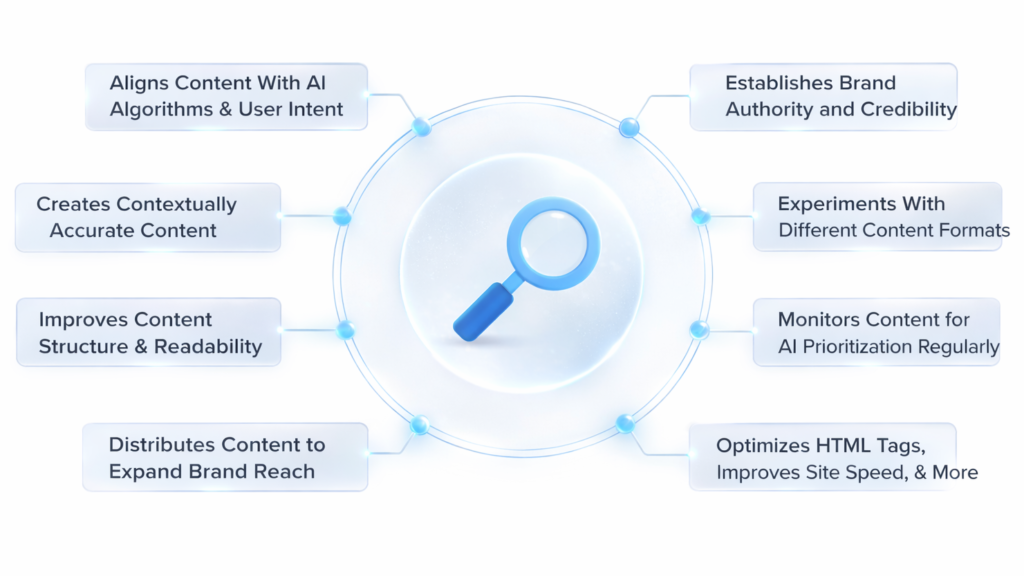
- Retrieval: When a user asks a question, the AI quickly scans a massive index of the web (much like Google does).
- Augmentation: It picks the most relevant “chunks” of information from various websites.
- Generation: It uses those chunks to write a brand-new, unique answer.
If your content is buried in long, rambling paragraphs, the AI can’t “retrieve” it easily. If your content is structured with clear facts and expert insights, you become the “source material” for that generated answer.
The Power of Data
AI engines have a high level of Trust in Data. They prefer to quote websites that use real numbers, clear headers, and simple, authoritative language. They are designed to minimize “hallucinations” (making things up), so they naturally gravitate toward the most factual-sounding content.
4. Key Benefits of GEO
Why should you put effort into these new strategies? Here is what’s in it for you:
- Instant Credibility: When Gemini or ChatGPT quotes your brand, it acts as a “seal of approval.” Users tend to trust the AI’s “source” immediately because the AI has done the vetting for them.
- Winning “Zero-Click” Searches: Over 60% of searches now end without a user ever clicking a link. GEO ensures your brand is the one providing that value, building brand awareness even without the traffic.
- Dominating Voice Search: When someone asks their car, smart speaker, or phone a question, the device reads the most “AI-friendly” answer out loud. If you win the citation, you win the voice.
- Better Lead Quality: If someone clicks your link after reading an AI summary, they aren’t just browsing. They already know you are an expert and are much closer to a buying decision.
- Future-Proofing: Search is changing fast. Investing in engine optimization for AI now means you’ll be visible while your competitors are still struggling with outdated tactics from 2022.
5. 5 Easy Ways to “Do” GEO
You don’t need a massive technical team to start. Here are five simple things you can do today:
- Use Hard Facts: AI loves numbers. Instead of saying “We have many happy customers,” say “We served 1,200+ clients in 2025 with a 98% satisfaction rate.”
- Add Expert Quotes: Include a direct quote from your founder or an industry specialist. AI treats these as high-value “expert” signals that add weight to the answer.
- Cite Your Sources: If you make a big claim, link to the study or the data that proves it. This shows the AI that your information is verifiable and trustworthy.
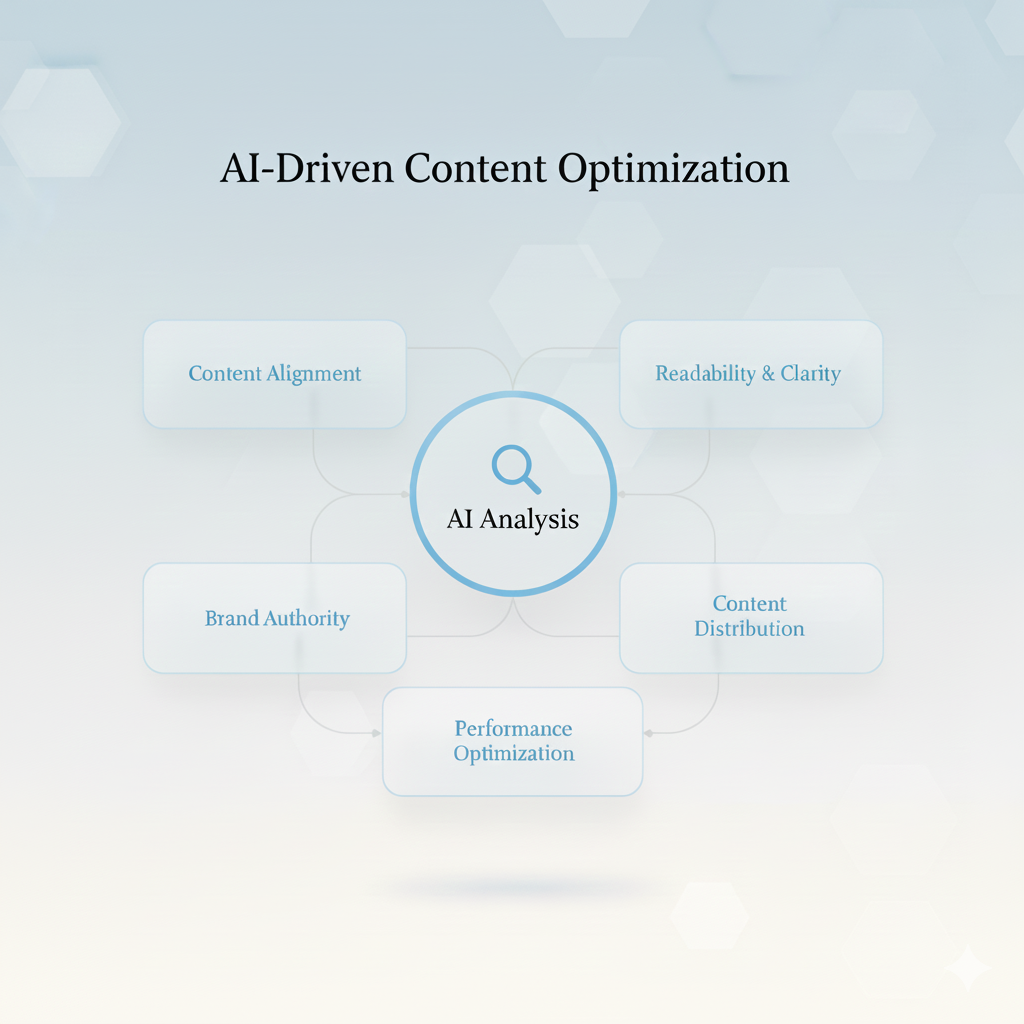
- Be Direct: Put the answer to the main question in the very first paragraph. This is often called “the inverted pyramid” style of writing.
- Use Clear Headers: Use “What is…” or “How to…” headers. This makes your page incredibly easy for an AI to “clip” and use as a direct answer.
6. Industry Examples: GEO in Action
- For a Bakery: Instead of “Best cookies in London,” optimize for “Why are sourdough cookies healthier?” and provide the nutritional science. The AI will cite you as the health expert.
- For a Tech Startup: Don’t just list features. Explain “How to integrate AI into a CRM” using step-by-step bullet points. AI models love structured lists.
- For a Law Firm: Instead of “Experienced lawyers,” write about “The 3 most common mistakes in small business contracts” with specific legal references.
7. Your “Monday Morning” Checklist
Ready to get started? Here is your simple to-do list for next week to jumpstart your generative engine optimization strategy:
- Update 3 Posts: Add one specific statistic or “hard fact” to your three most popular blog posts.
- Write a Summary: Add a 1-sentence “TL;DR” (Too Long; Didn’t Read) summary at the very top of your homepage.
- Audit Your Entities: Ensure your Business Name, Address, and Phone Number are identical on Google, Yelp, Facebook, and your own site.
- Add a FAQ Section: Use structured data (Schema) to tell the AI exactly what questions your page answers.
- The AI Test: Ask ChatGPT or Gemini a question about your niche. Does your website’s info sound like something it could easily summarize?
- Maximize Your Reach: Beyond search, you can also support your authority by exploring different types of email marketing to nurture the leads that find you through AI citations.
Final Thought: The Human Element
Don’t let the technology scare you. At the end of the day, GEO is just about being the most helpful, clear, and honest source of information on the web. While the “engines” are new, the goal is the same: providing value to the person on the other side of the screen.
If you focus on being the “best answer” for a human, the AI will naturally find you. Start small, focus on facts, and watch your brand become the voice of your industry in the AI-powered future.

Leave a Reply