

Table of Contents
Introduction
So, you’ve started building a list and you’re sending out occasional updates. That’s a great start! But if you feel like you’re just hitting “send” on the same generic message to everyone and hoping for the best, you’re stuck in the “email blast” phase.
To succeed in email digital marketing, you need to think like a guide, not a megaphone. Sending the same message to everyone at the same time is like a waiter bringing the same dish to every table regardless of what they ordered. This approach often leads to low engagement and high unsubscribe rates.
Strong content marketing strategies ensure your emails deliver consistent value instead of generic messages.
What is Email Marketing?
Before we dive into the different strategies, let’s define the basics. What is email marketing? Simply put, email marketing is a digital strategy where businesses send messages to a group of people who have given explicit permission to hear from them.
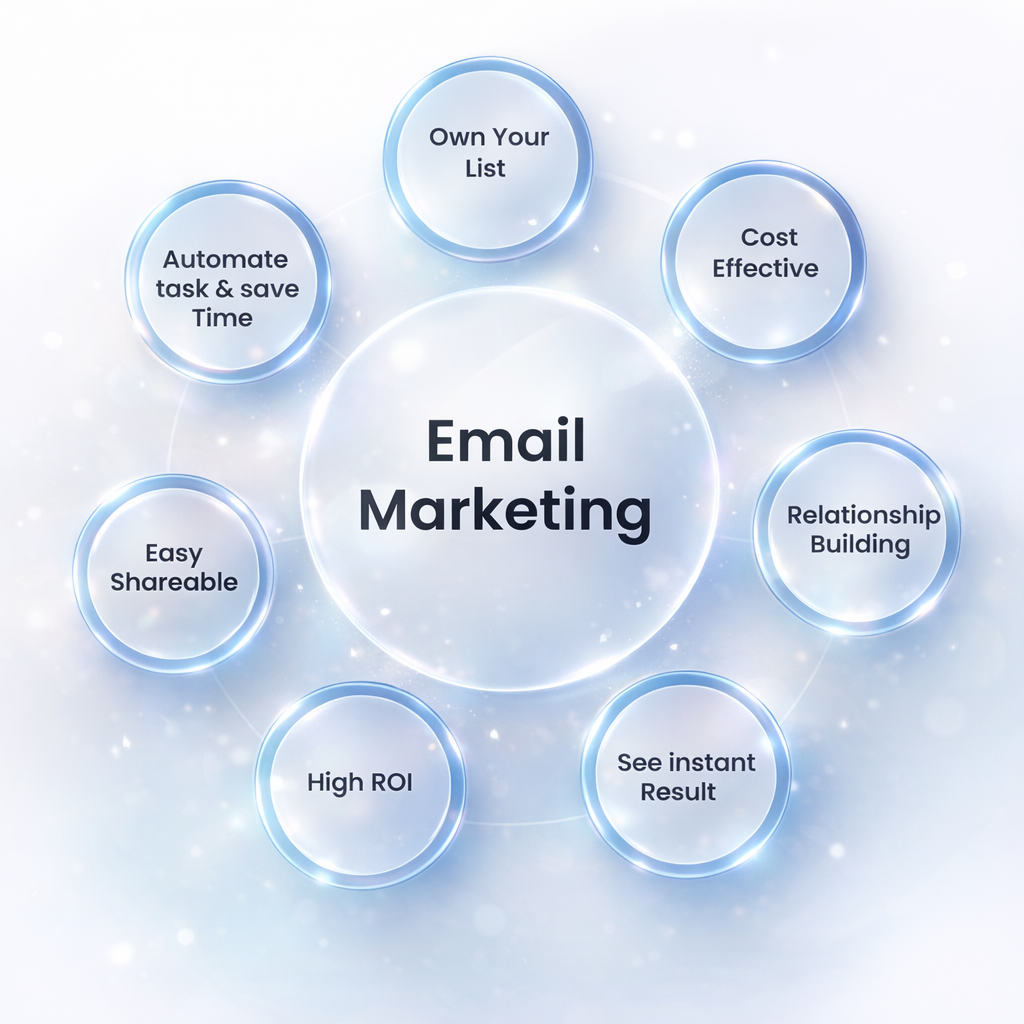
The goal isn’t just to “send mail”—it’s to build relationships, provide value, and ultimately drive sales revenue through consistent, helpful communication. When done right, it is the most personal and direct way to reach your audience.
1. Explaining the 3 Major Types of Email Marketing
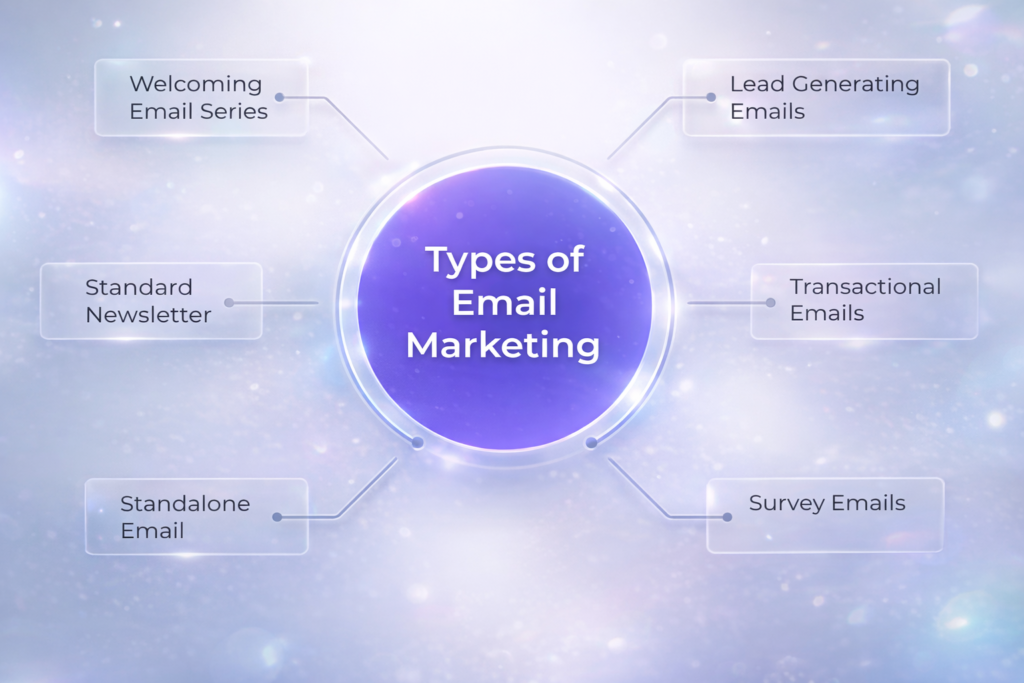
To build a professional strategy, you need to understand the three distinct categories of emails. Think of these as the “tools” in your marketing toolbox. Each one has a specific job to do.
Category 1: One-to-Many Campaigns (Broadcasts)
Broadcasts are manual emails you send to a large group of people at a specific time. You are the one who decides when they go out. They are perfect for timely updates and mass announcements.
- Promotional Emails: These are focused on direct sales. Their job is to get someone to buy something right now.
- When to use: During a flash sale, a new product launch, or a holiday discount event.
- Pro Tip: Use a strong “Call to Action” (CTA) like “Shop the Sale” so readers know exactly what to do.
- Newsletters: These are your relationship-builders. Instead of asking for a sale, you are giving away free value.
- When to use: Weekly or monthly to share blog posts, industry tips, or company updates.
- Why they work: They keep you “top-of-mind” so that when the customer is ready to buy, they think of you first.
- Seasonal & Event Emails: These tie your brand to what’s happening in the real world.
- When to use: Black Friday, Mother’s Day, or a local community event.
- Example: “Our Winter Survival Guide & Sale is Here!”
Category 2: Behavior-Triggered Emails (Automations)
Automations are “set-it-and-forget-it” emails. They are triggered automatically by a user’s specific action. This is how you “market while you sleep.”
- The Welcome Series: This is the most important automation you will ever build. It’s sent immediately after someone signs up.
- Goal: To introduce yourself, deliver a “lead magnet” (like a discount code), and set expectations for future emails.
- Abandoned Cart Emails: This is a “gentle nudge” sent to someone who put items in their shopping cart but left without buying.
- Goal: To recover lost revenue. Sometimes a simple “Did you forget something?” is all it takes to close the sale.
- Onboarding Drip Campaigns: These are educational emails sent over a period of time (e.g., 30 days).
- Goal: To teach new customers how to use your product so they don’t get frustrated and quit.
- Re-engagement (Win-back) Campaigns: These target subscribers who haven’t opened an email in 6 months or more.
- Goal: To ask “Do you still want to hear from us?” and offer a special “we miss you” discount to bring them back.
Category 3: Transactional Emails (Operational)
These are functional, one-to-one emails triggered by a system process. Because they contain vital information (like a receipt), they have the highest open rates in the industry.
- Order Receipts & Confirmations: “Thank you for your order! Here is your proof of purchase.”
- Shipping Notifications: “Great news! Your package is on its way and will arrive Tuesday.”
- Review Requests: Sent a week or two after a customer receives their product.
- The Opportunity: Use this space to build social proof by asking for a star rating or a photo of the product in use.
2. Your 5-Step “Get Started” Checklist
If you’re feeling overwhelmed, don’t try to do everything at once. Follow this simple path to move from “blasts” to a diversified strategy:
- Define Your Audience: Who are you talking to? Create a “customer persona.” If you’re a bakery, your audience might be “busy parents looking for healthy treats.”
- Choose an Email Service Provider (ESP): You need a professional tool like MailerLite, ConvertKit, or Mailchimp. Do not send mass marketing emails from your personal Gmail or Outlook account—you will get flagged as spam!
- Build Your List Honestly: Use opt-in forms on your website and social media. Never buy email lists. It’s the fastest way to ruin your reputation and get blocked by email providers.
- Pick Your First Campaign: Start with a Welcome Email. It’s the easiest automation to set up and provides the most immediate value.
- Measure and Adjust: Once a month, look at your “Open Rate” (how many people opened) and “Click-Through Rate” (how many people clicked a link). Use these numbers to see what your audience likes.
3. Benefits of Email Marketing: Why It’s a Game Changer
You might be wondering: “Is email marketing still relevant in the age of TikTok and Instagram?” The answer is a resounding yes.
- Unrivaled ROI: For every $1 spent, email marketing generates an average return of $36. No other channel comes close.
- Direct Ownership: You don’t own your followers on social media; the platform does. If the platform shuts down, your audience is gone. But you own your email list. It is a permanent business asset.
- Personalization at Scale: With modern tools, you can send an email that feels personal to 5,000 people at once by using “merge tags” to include their first names or past purchase history.
4. Strategic Concepts (For the Professionals)
As you scale your email marketing, you will need to move beyond the basics and master these three core concepts:
- Segmentation: This means dividing your list into smaller groups. For example, you might have a segment for “New Leads” and another for “VIP Customers.” You wouldn’t send a “New Customer Discount” to someone who has already bought from you five times.
- Personalization: This goes beyond just using a name. It’s about sending content that matches their interests. If someone only buys men’s shoes from your store, don’t send them an email about the new arrival of high heels.
- List Hygiene: This sounds technical, but it’s just “cleaning.” Every few months, delete subscribers who never open your emails. This improves your deliverability, ensuring your emails actually land in the inbox of people who care.
5. Drawbacks of Email Marketing: The Challenges
To be successful, you must be realistic about the hurdles you will face:
- The Battle for the Inbox: People get hundreds of emails a day. Your subject line has to be interesting enough to make them want to click.
- Deliverability Issues: If you use “spammy” words like “FREE” or “WIN MONEY” in all caps, filters will send you to the junk folder.
- Audience Burnout: If you email too often without providing value, people will get annoyed. It’s better to send one amazing email a week than five boring ones.
Conclusion
A well-executed email strategy is a game-changer for any business. By moving away from the “one-size-fits-all” blast and utilizing Broadcasts, Automations, and Transactional emails, you turn a simple message into a meaningful connection.
Start small, be helpful, and remember: the goal is to build a relationship, not just a transaction.

Leave a Reply